Kodaira: Seibu Shinjuku Line "Grade Crossing No. 1" Under Consideration for Elevated Railway — Will the 40-Minute Blockages Finally End?
More than a few Kodaira residents know the feeling of being stuck at this crossing every day.
The section near Kodaira Grade Crossing No. 1 on the Seibu Shinjuku Line — between Tanashi Station and Hanakoganei Station — has emerged as a candidate for elevated railway consideration under a Tokyo Metropolitan Government plan.
The attention was sparked by a city council member's public statement on the matter.
This is a crossing that has recorded peak blockage times of up to 40 minutes. Will the day it disappears really come?
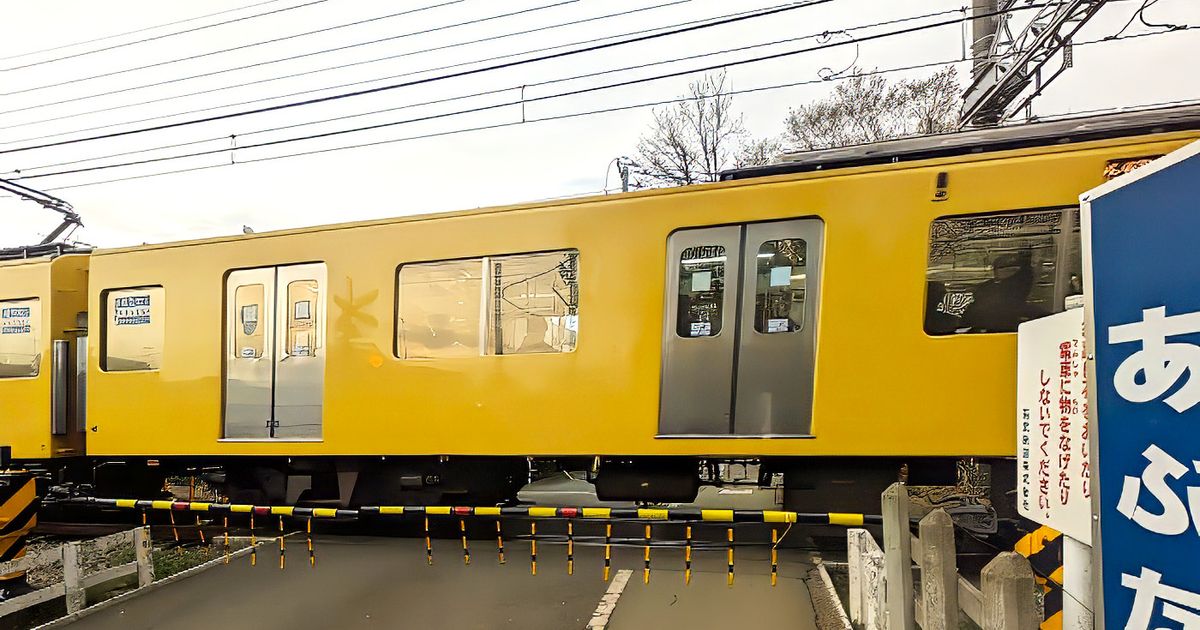
Where Is "Grade Crossing No. 1"?
Kodaira Grade Crossing No. 1 is located west of Kodaira Station on the Seibu Shinjuku Line.
The surrounding area is a dense residential neighborhood, with heavy foot and vehicle traffic during morning and evening rush hours.
The Ministry of Land, Infrastructure, Transport and Tourism defines a "chronically blocked crossing" as one where the barrier is down for 40 or more minutes during the peak hour.
This crossing is said to meet that threshold.
Near the Hanakoganei No. 4 Grade Crossing, close to Showa Hospital, there have been incidents of emergency vehicles being blocked by the crossing and buses running more than 20 minutes behind schedule.
This stretch — including Kodaira Grade Crossing No. 1 — has long been a community concern in terms of traffic congestion, safety, and emergency response.
How It Came Up as a "Consideration Target"
In its 2004 "Crossing Countermeasures Basic Policy," Tokyo Metropolitan Government identified several rail sections as candidates for elevated railway consideration.
The section of the Seibu Shinjuku Line near Tanashi Station to Hanakoganei Station (approximately 4 km) is one of them.
This section contains 12 grade crossings, of which 5 are in Kodaira City, and 4 have been designated as "priority crossings" requiring urgent action.
In November 2024, Tokyo Metropolitan Government established the "Study Group on Promoting Crossing Countermeasures" and began revising the policy.
In response, City Council Member Haruka Ishizu (Japan Innovation Party) argued at a general question session for the section to be "upgraded to a project candidate designation."
This has renewed attention on the issue, including on social media.
The Large Gap Between "Candidate" and "Project"
As of now, the Tanashi–Hanakoganei section remains a "consideration target."
This stage means "let's think about it in the future" — it has not yet reached the "project candidate" or "project implementation" stages where actual construction begins.
Elevated railway construction (continuous grade separation projects) is a large-scale project led by Tokyo Metropolitan Government, requiring significant funding.
Because the city also bears part of the financial burden, realizing the project requires coordination among all three parties: the metropolitan government, the city, and the railway operator, Seibu Railway.
Even in projects that have already been advanced — such as the Nakai–Nogata and Igogi–Nishi-Tamagawagakuen sections — it has taken decades from the initial consideration to actual construction.
Voices from Kodaira City and Local Residents
In fiscal year 2019, Kodaira City conducted a survey of approximately 2,000 residents near Hanakoganei Station regarding elevated railway construction.
The results are published on the Kodaira City official website, and many residents expressed support for the elevation.
The city council's "Seiwaku" faction has also approached Seibu Railway's headquarters to advocate for the project, reflecting a citywide effort to push for its realization.
For residents who have long suffered from crossing congestion, the establishment of this study group and the revision of the policy feels like "finally, something is moving."
Future Schedule and Key Points to Watch
Tokyo Metropolitan Government's "Revised Crossing Countermeasures Basic Policy" released an interim summary in September 2025 and sought public comments.
The key question going forward is whether the Kodaira section will be upgraded to "project candidate" status within this revised policy.
If that upgrade is achieved, the metropolitan government, city, and Seibu Railway can begin concrete project planning.
At the same time, there remains a possibility that the section stays at "consideration target" without being elevated.
It is well worth continuing to follow Tokyo Metropolitan Government's announcements and the direction of Kodaira City Council discussions.
From Kodaira City Toward a "City Without Crossings"
For Kodaira residents who stop each morning wondering "how many minutes will I wait today?", elevated railway construction is not a distant dream — it is an urgent daily reality.
Through Tokyo Metropolitan Government's revised crossing policy and sustained advocacy in the city council, the path toward the day Grade Crossing No. 1 disappears is moving forward, step by step.
Check Kodaira City's Urban Planning and Elevated Railway Information for the latest updates.
Progress on the revised policy is also published on Tokyo Metropolitan Government's Crossing Countermeasures page (Bureau of Urban Development).
Keep an eye on Tokyo Metropolitan Government announcements and Kodaira City Council developments using the links above.

多摩エリアのディープな魅力を発信するWebメディア「多摩FM」の公式編集部アカウント。 地域に根ざしたカルチャーやライフスタイル、ちょっとマニアックなローカル情報まで、ラジオのようなどこか心地よい温度感でお届けします!